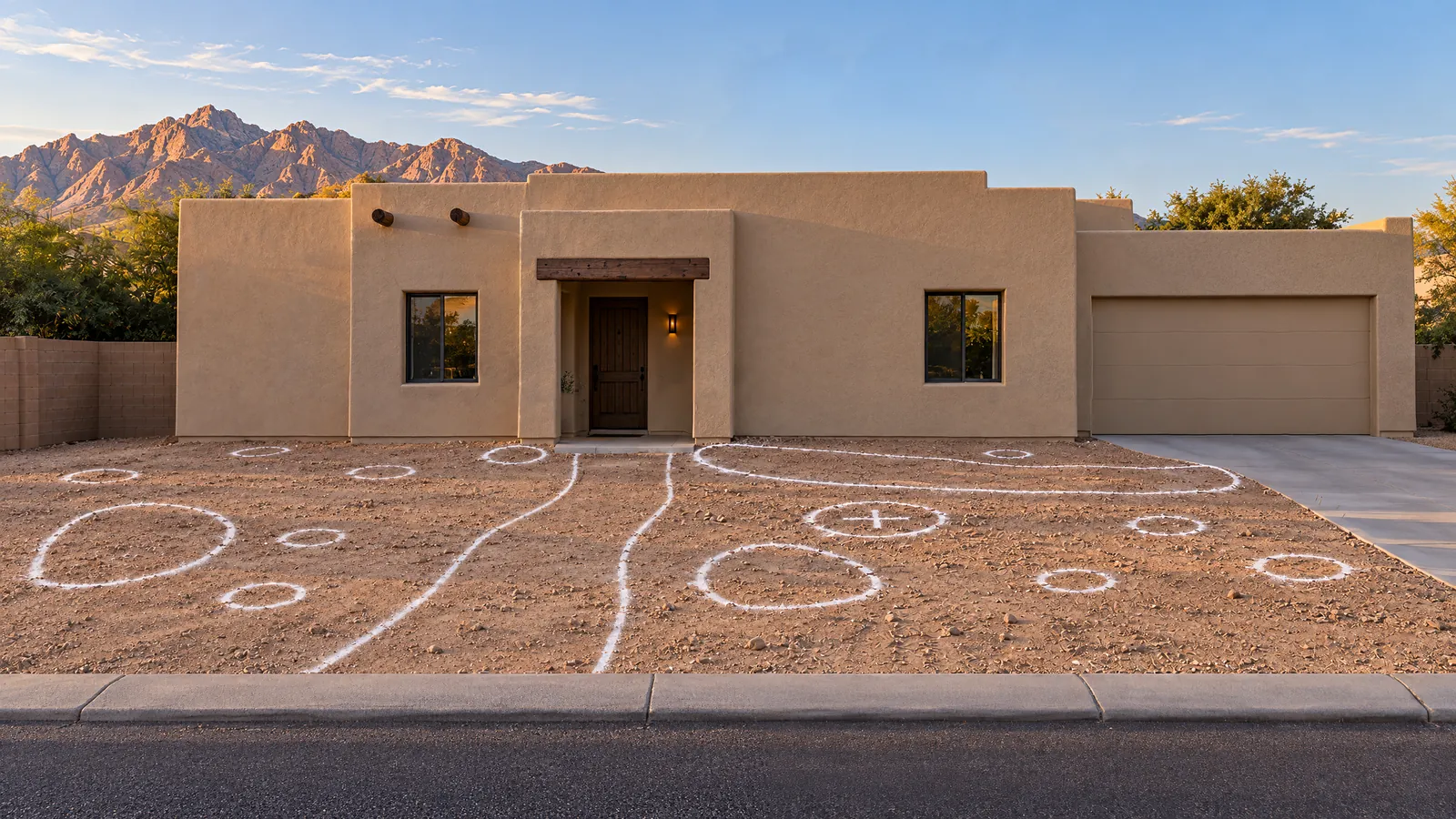
We draw every plant before we dig.
We design and build desert yards in Tucson. Before a shovel goes in, you see the whole plan, with every plant drawn and its water counted.
It’s free. Your drawn plan and a fixed price come within ten days.
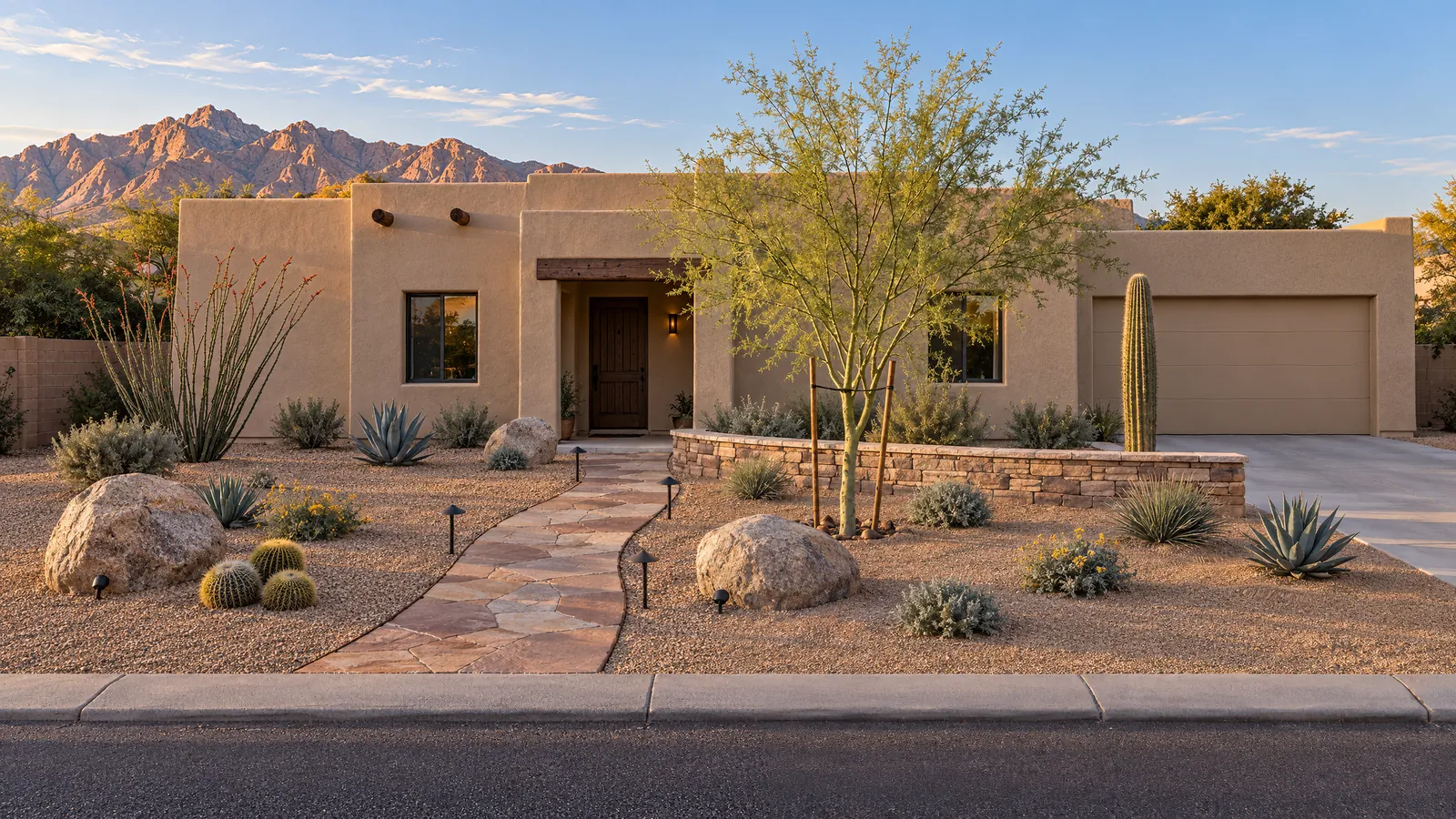
Every plant in that yard has its own plate.
This is the plan we drew for it: 23 plants on drip. Point at a plant or tap it, and its plate comes up. It tells you how big the plant gets, how much water it drinks and how it gets through July.
gallons of water a year this yard saves against the lawn it replaced
The lawn it replaces. 1,350 sq ft of Bermuda grass needs about 42 inches of water a year here. One inch over one square foot is 0.623 gallons: 1,350 × 42 × 0.623.
35,300 galThis plan, on drip. 23 plants, each counted at full size. Every plate shows its share.
− 5,800 galSaved each year. About five-sixths of the water, and no mowing.
29,500 galExample calculation for this concept plan. Bermuda grass is counted at 60% of Tucson’s reference evapotranspiration (about 70 inches a year). The desert plants get 10–20% of it over their full-grown canopy, on drip at 90% efficiency. The first summer takes more while roots establish. We run the same numbers for your yard.
The plant list
, , , , , , , .
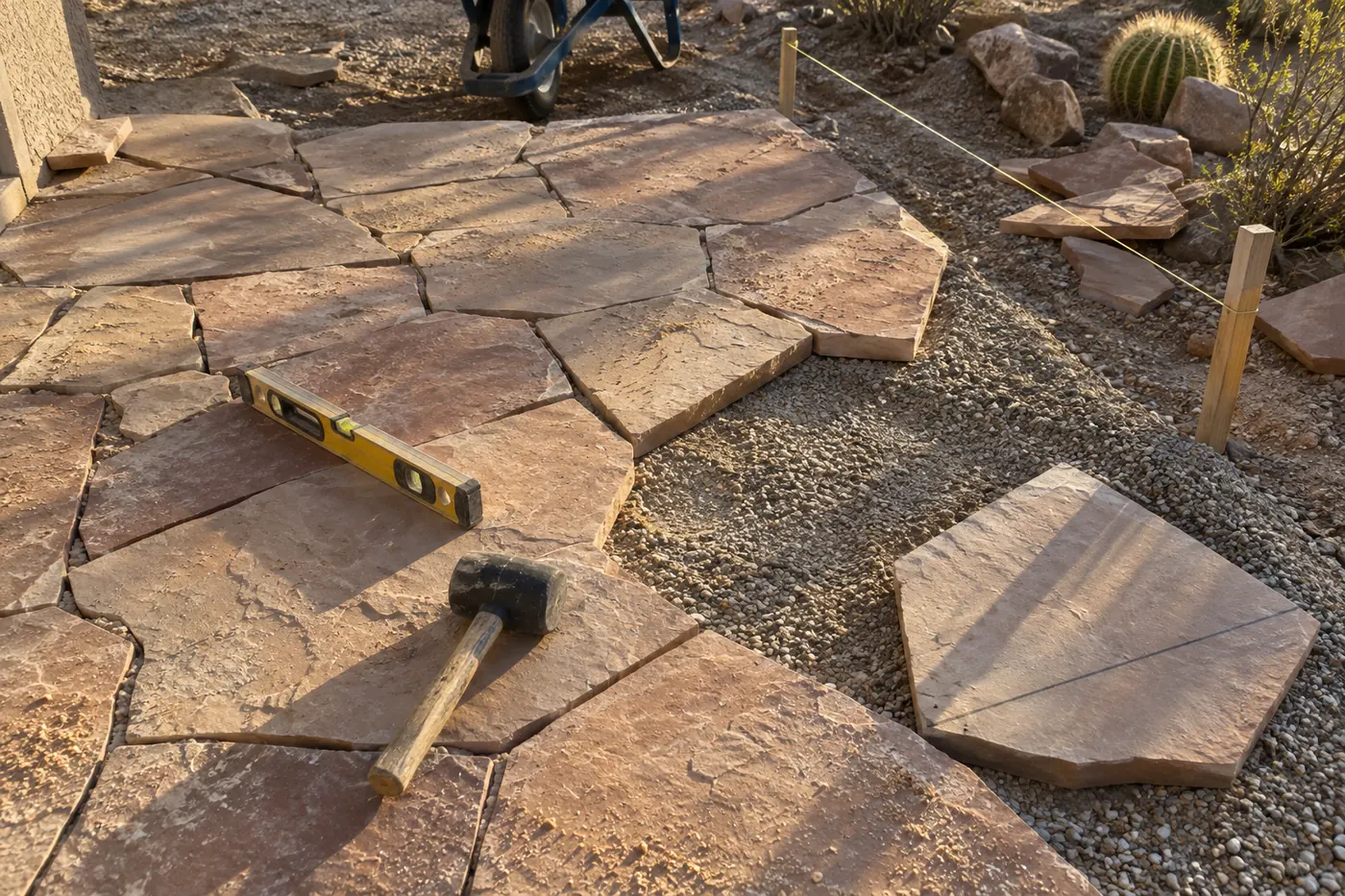
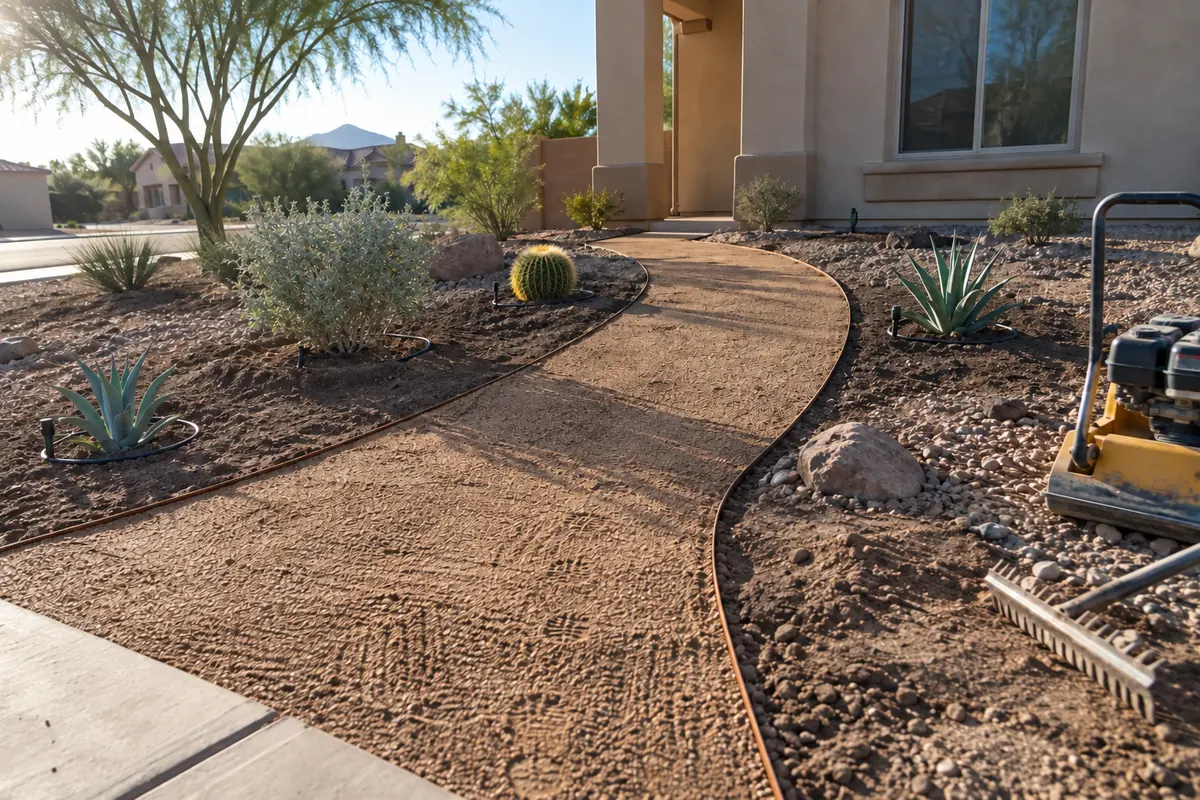
Most of a desert yard is what goes between the plants.
Gravel that drains in a monsoon, stone that doesn’t heave, boulders set deep and a quarter inch of steel holding every edge. Each one has its own mark on the plan.
Decomposed granite
Crushed granite, screened to 3/8″ and laid 2″ deep. It packs firm underfoot and still drains in a storm.
$2.40per sq ftArizona flagstone
Laid with tight joints on a compacted base, so a path or a pool deck never rocks underfoot.
$26per sq ftBoulders
Picked at the yard for colour and lichen, craned in and buried a third deep so they look like they grew there.
$420each, fromSteel edging
A quarter inch of steel between gravel and stone. It rusts to a brown you stop noticing.
$16per ftDrip irrigation
One emitter per plant, sized to the plant, on a controller that follows the season.
$1,600front yard, fromLow-voltage lighting
Warm 2700K fixtures aimed at trunks and walls, on a sunset timer.
$210per fixtureThe front yard in the plan above, all in
With the plants, the seat wall and taking out the lawn.
about $18,000installedExample prices for this concept site, installed. Your plan comes with a fixed price.
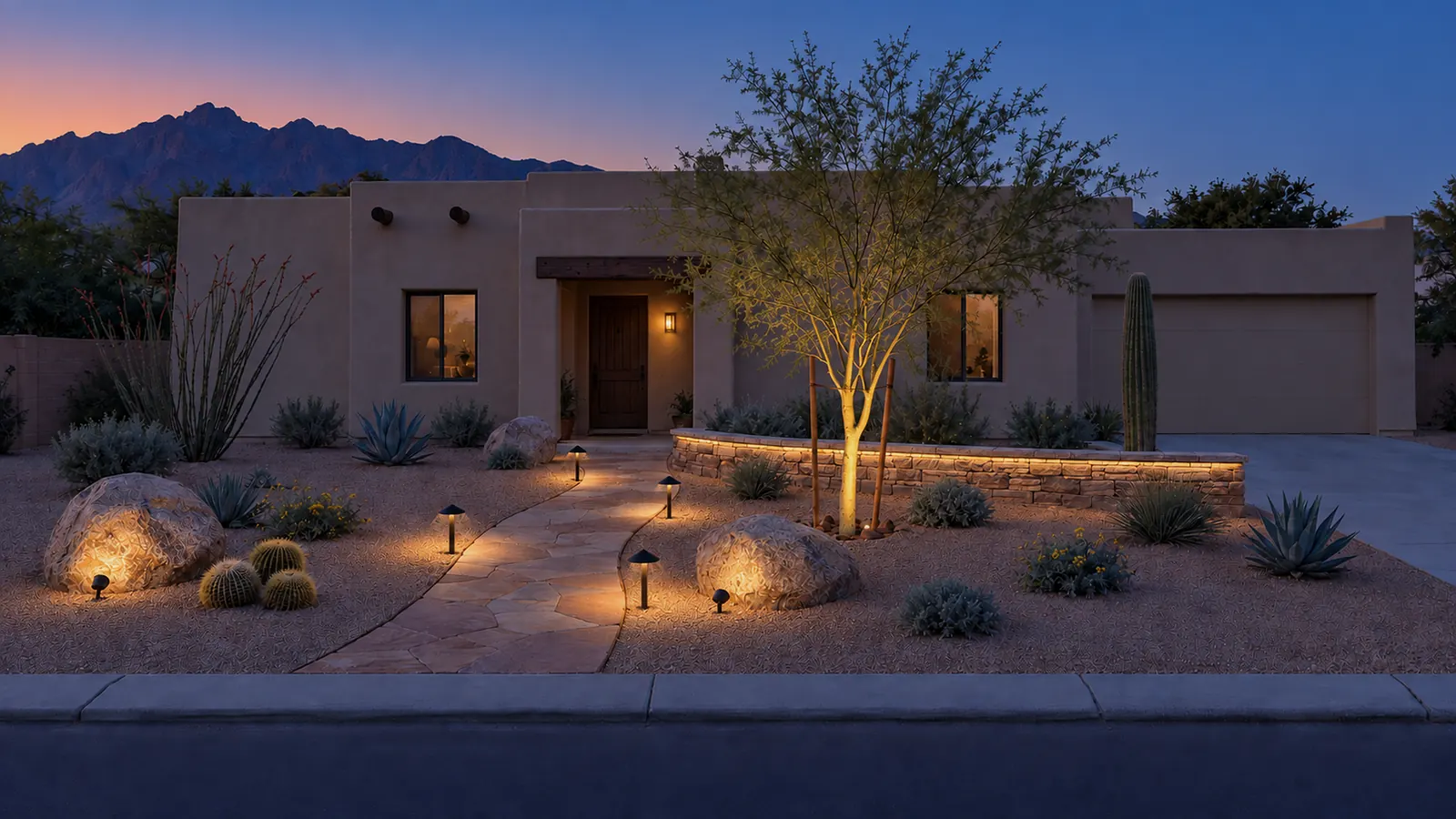
In July you live in the yard after dark.
From May to September it’s too hot to sit out before sundown. So we plan the light with the plants: warm 2700K light on the tree, the path, the wall and the boulders, and none of it glaring into the house. Eight low-voltage lights come on with the sunset.
- Uplight on the palo verde1 × 7 W
- Path lights4 × 3 W
- Light along the seat wall1 × 9 W
- Uplights on the boulders2 × 4 W
- Porch lightsame timer
From the first walk-through to your first summer.
Example reviews for this concept site.
They drew the whole yard first, so we knew what we were buying. The crew was done in seven days and left the street clean. Our water bill fell by half the first summer.
The test hole hit caliche a foot down, so they set the palo verde where it could root. In June they came back to turn up the drip, like they said they would.
- Week 1
Site visit
We walk the yard with you and dig a test hole to find the caliche, the hardpan that stops roots and water. Free, about an hour.
- Week 2
The plan
A drawn plan like the one above, with the water math and a fixed price. Change anything you like and we redraw it.
- Weeks 3 to 5
The build
Lawn out, grading and drainage, drip, stone, then plants. Most front yards take six to nine working days.
- First summer
The check-ins
We come back in June and again in August to adjust the drip while the roots settle in.
Book a site visit.
An hour in your yard, free. Within ten days you get a drawn plan with a fixed price.
520-555-0133Mon to Fri, 6:30 to 3:30. From June to September we start at 5:30 to beat the heat.